
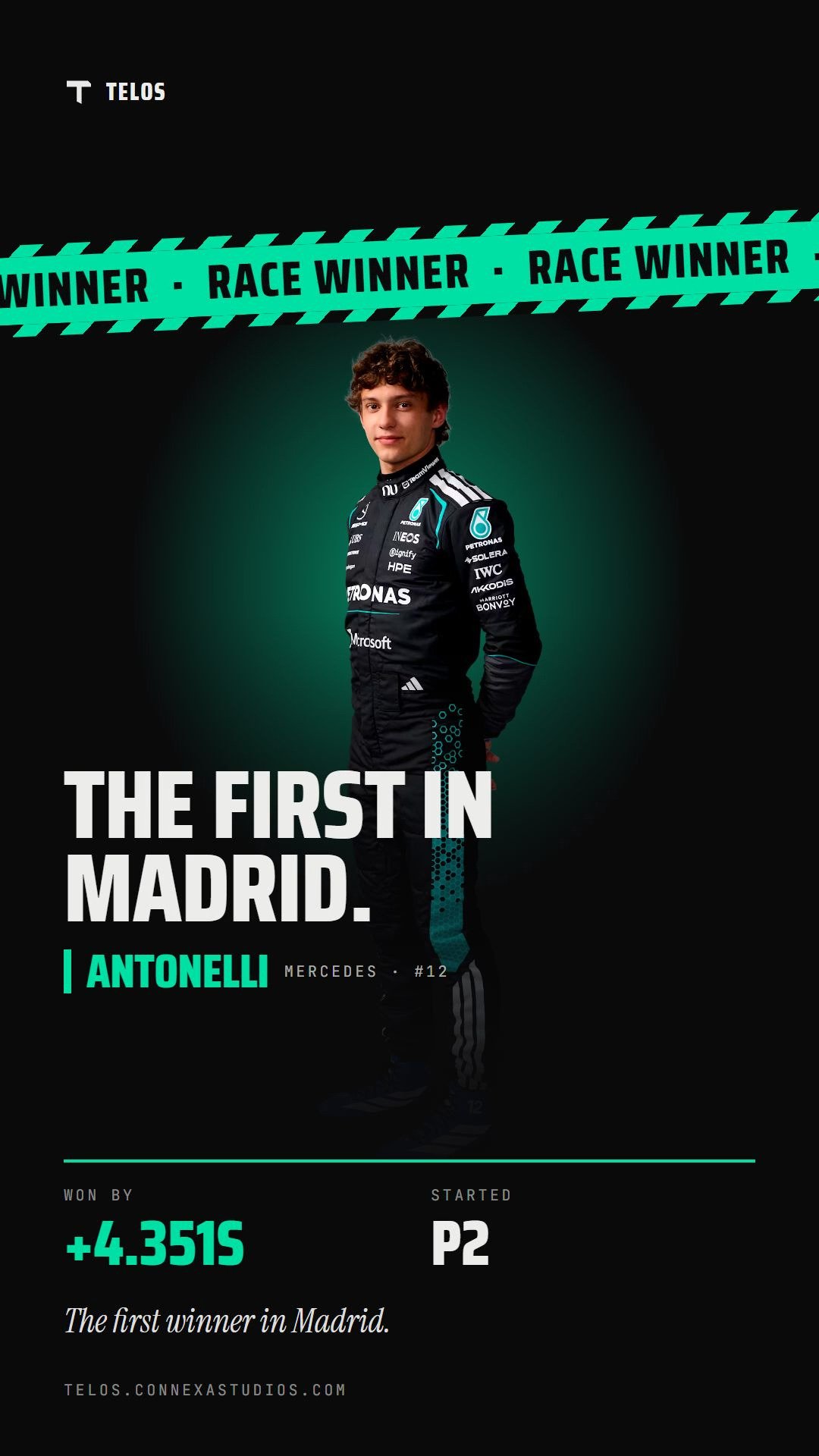
Kimi Antonelli claimed victory at the inaugural Madrid Grand Prix, converting his second‑grid start into a win on a circuit seeing its first Formula 1 action. Starting alongside pole‑sitter Lando Norris, Antonelli managed to overtake the British driver and maintain the lead to the chequered flag.
Race Dynamics
The race unfolded on a brand‑new layout, meaning teams had no historical data to rely on for tyre degradation or optimal pit windows. Antonelli’s team elected an aggressive opening stint, capitalising on clean air to build a gap that forced Norris into a defensive overcut strategy. By preserving tyre life while Norris attempted an undercut, the Italian‑British driver could stay ahead when the pit stops opened, demonstrating a keen understanding of the tyre cliff on a fresh surface.
Margin to the Rest of the Field
Max Verstappen, the reigning champion, finished 4.351 seconds behind Antonelli, a notable gap given the lack of precedent on the track. The time differential underscores how the leading pair managed the dirty air and track evolution better than the rest of the field, keeping a consistent pace while others struggled with the unknown grip levels.
Antonelli’s front‑row start turned into a masterclass in race‑craft on an untested circuit.
Implications
Securing the first win in Madrid adds a historic milestone to Antonelli’s résumé and signals his capacity to adapt quickly to new environments. Norris, despite securing pole, was unable to convert his qualifying performance into a podium, highlighting the fine margins between a strong single‑lap and race‑long execution. Verstappen’s four‑second deficit, while respectable, suggests that the new layout may favour drivers who can extract performance early and manage tyre wear efficiently.
The result reshapes the early narrative of the season, with a fresh face atop the podium and established contenders reassessing their approach to the novel challenges presented by the Madrid circuit.