
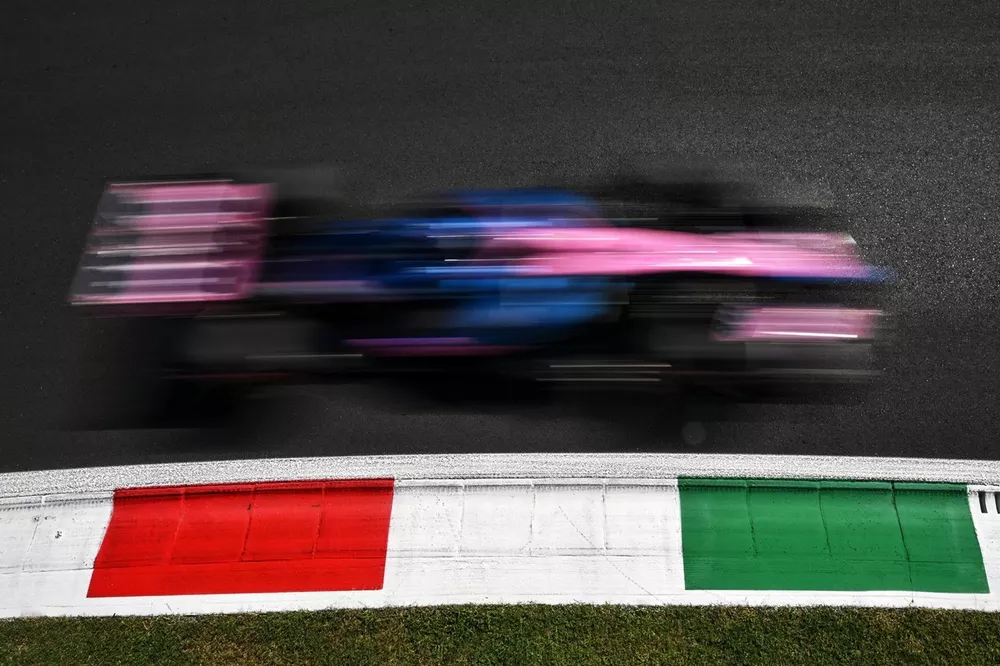
The 5 September qualifying session at Monza concluded with the grid locked in just before sunset, triggering TELOS’s model pick for the Italian Grand Prix. The model, which blends recent‑form Elo with the official starting order, could only be rendered after the session because win probabilities are essentially flat – roughly an 11 % chance for the pole‑sitter – until the grid is known.
Grid publication and immediate impact
The grid card was generated straight from the official qualifying results, providing an unfiltered fact sheet of each driver’s starting position. No editorialising was added; the card simply listed the order as it appeared on the FIA timing screens. This immediate release gave teams and fans a concrete reference for strategy planning, especially on a circuit where tyre degradation is low but slip‑stream battles are fierce. With the grid in hand, TELOS could apply its probabilistic engine, which weights the Elo rating of each driver against their grid slot using the formula strength = exp(fw*(rating-base)scale - gw(grid-1)). The model’s pick card, published later that evening, recorded the resulting win odds for each contender.
Pole lap visualisation
The pole‑lap card highlighted the three qualifying phases – Q1, Q2 and Q3 – using rescaled bars to illustrate the inevitable drop in lap times as fuel loads fell and drivers pushed the limits. Although the original design attempted a ruler‑style representation of Q3 gaps, it was deemed inaccurate and omitted. The final visual focused on the driver who secured pole, placing his portrait against a coloured backdrop while the constructor crest was rendered in white to avoid brand‑colour clashes. The design choices underscored TELOS’s commitment to clarity over decorative flair.
“Flat win probabilities before the grid means the model’s pick only becomes meaningful once qualifying ends.”
Model pick and race‑week outlook
With the grid published, TELOS’s pick card displayed a hierarchy of win probabilities that reflected the combined effect of recent form and starting position. Because the pre‑qualifying probabilities were uniformly low – around 11 % for the top‑ranked driver – the model’s decisive factor became the actual grid placement. Drivers starting on the front row received a modest boost, while those further back saw their odds compressed toward the baseline. The pick card also recorded the exact time of publication, establishing a transparent record of the model’s stance before the race began.
The Saturday outcome set up several strategic narratives for Sunday. First, the front‑row starters could aim for an undercut on the opening laps, exploiting the low tyre wear to maintain track position. Second, mid‑grid drivers faced the classic Monza dilemma of choosing between a short stint on the soft compound to gain an early advantage and a longer run on the medium to avoid the tyre cliff later in the race. Finally, the back‑markers, now quantified with lower win probabilities, were forced to consider aggressive overtaking plans or alternative pit‑window strategies to climb into the points.
How Saturday informs the Sunday race
Monza’s high‑speed layout amplifies the importance of clean air and clean exits from the pit lane. The grid order, fixed on Saturday, determines who will initially enjoy the slip‑stream advantage and who must battle through traffic. TELOS’s model, now calibrated with the official starting positions, predicts that any driver who can execute a clean overcut – staying out longer on a fresh set while rivals pit earlier – could gain a decisive position before the first sector’s heavy braking zone. Conversely, the model warns that drivers who lose track position early risk falling into the “dirty‑air” penalty, where aerodynamic turbulence hampers lap times and accelerates tyre degradation.
Overall, Saturday’s qualifying session provided the essential data points for TELOS to transition from a flat‑probability outlook to a nuanced race‑week forecast. The grid card delivered the factual foundation, the pole‑lap card offered visual context, and the model pick card locked in the probabilistic expectations that would guide teams’ strategy discussions on Sunday. The interplay of starting position, tyre choice, and undercut/overcut opportunities now frames the narrative for the Italian Grand Prix, with the model’s odds serving as a benchmark against which the race’s unfolding drama will be measured.