
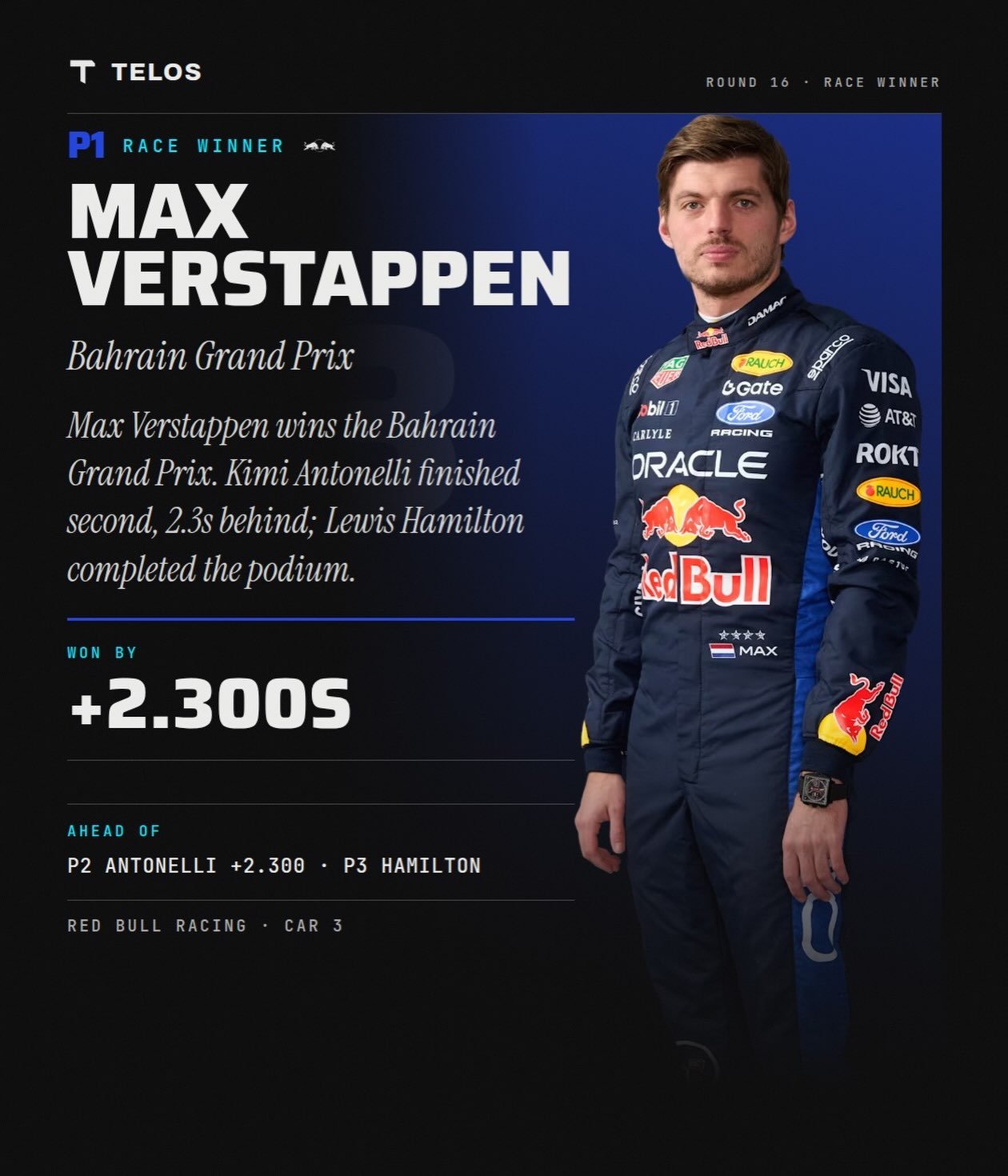
Max Verstappen crossed the line in Bahrain 2.3 seconds ahead of Kimi Antonelli, while Lewis Hamilton rounded out the podium.
Verstappen’s Dominant Pace
Verstappen’s car was able to maintain a consistent rhythm throughout the race, avoiding the tyre cliff that often appears in the latter stages of a stint. By staying clear of dirty air and managing his tyre degradation, he was able to dictate the pace and force the field to react to his strategy rather than the other way around. The Dutchman’s ability to extract performance from the medium‑compound tyres allowed him to build a gap that proved insurmountable for his rivals.
Antonelli’s Impressive Debut
Kimi Antonelli, a newcomer to the grid, managed to stay within striking distance of the race leader for the majority of the event. By executing a clean overcut during the mid‑race pit window, he maximised the fresh tyre advantage and kept the pressure on the front‑runners. His composure in clean air and avoidance of the undercut tactics employed by other teams enabled him to finish a respectable second, marking a noteworthy entry into Formula 1.
A clear gap and flawless execution secured Verstappen’s win.
Hamilton’s Steady Recovery
Lewis Hamilton, starting from a less favourable position, relied on a balanced stint to claw back track position. By timing his pit stop to avoid traffic and emerging onto a clear stretch of track, he was able to execute an efficient undercut that lifted him into third place. His experience in managing tyre wear and navigating the final laps in dirty air helped him preserve enough performance to hold off any late challenges.
The Bahrain race demonstrated how strategic tyre management, precise pit‑stop timing, and the ability to stay out of the aerodynamic turbulence created by rivals can shape the final order. Verstappen’s control of the race tempo, Antonelli’s disciplined overcut, and Hamilton’s calculated undercut combined to produce a podium that reflected both raw speed and tactical acumen.