
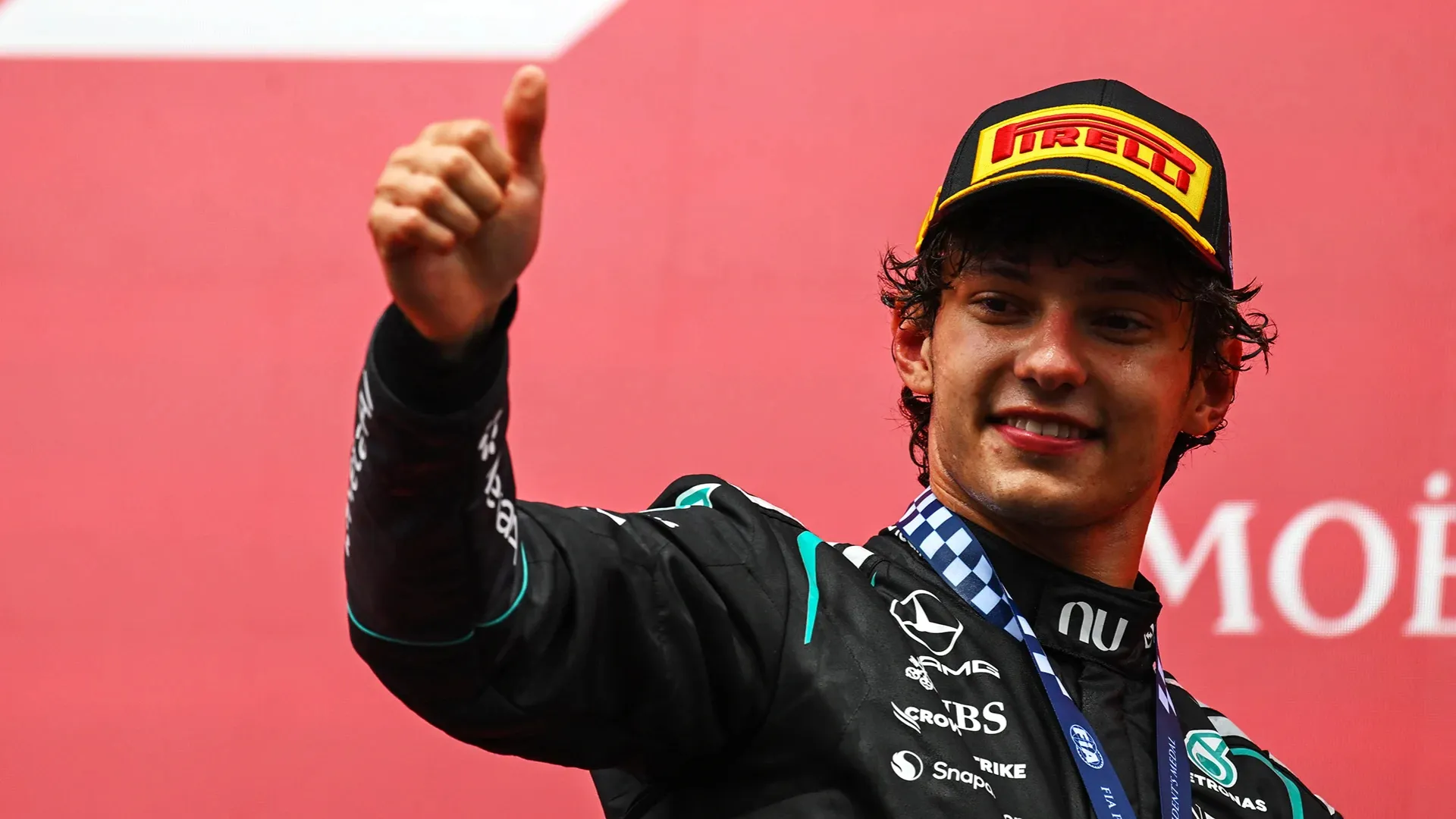
Kimi Antonelli entered the Belgian Grand Prix with a 65.7% chance of victory according to TELOS’s pre‑race model, the highest win probability of any driver on the grid. The prediction hinged on a projected duel with Charles Leclerc, whose win odds were a modest 0.3% but whose podium likelihood stood at 99.7%.
Model Call and Underlying Assumptions
The Saturday call listed five contenders with win and podium percentages. Antonelli’s 65.7% win probability was driven by a strong qualifying position, low tyre degradation in the early stints and a favourable pit‑window window that allowed an undercut on Leclerc’s Ferrari. TELOS’s simulation assumed a clean race, no safety‑car interruptions, and that the Mercedes‑Mercedes tyre set would retain a performance edge into the final stint. Leclerc’s 0.3% win chance reflected the model’s expectation that the Ferrari would have to rely on an overcut, fighting higher tyre wear on the long Spa straights.
The Duel Unfolds
From the start Antonelli cleared the field, posting lap times in the low 1:10s after the opening laps, while Leclerc struggled to match the early pace. By lap 12 Antonelli’s stint average was 1:10.8 compared with Leclerc’s 1:11.4, creating a 0.6‑second gap that grew as the Ferraris entered the medium tyre window. The Mercedes‑Mercedes pit‑stop on lap 23 placed Antonelli on fresh softs, giving him an undercut advantage of 0.4 seconds over Leclerc, who pitted on lap 26.
The critical phase came on laps 40‑45 when tyre degradation began to bite. Antonelli’s out‑lap after his second stop was 1:10.2, while Leclerc’s out‑lap on the ageing mediums was 1:11.0, widening the gap to just under two seconds. The model had flagged this as the “turning point” – a tyre cliff for the Ferrari that would be hard to overcome without a late‑race safety car, which never materialised.
Verdict and Grading
The race finished with Antonelli first, Leclerc second, 1.952 seconds behind, and Max Verstappen third. TELOS’s win probability for Antonelli was 65.7%; the actual outcome confirms the model’s top‑rank prediction. The podium probability for Antonelli (99.7%) and Leclerc (99.7%) were both realised, while the lower‑ranked drivers performed within the expected spread.
Antonelli’s early undercut sealed the race before the final stint began.
The grading framework used by TELOS awards a “hit” when the predicted winner matches the actual winner and a “near‑hit” when the podium order aligns. In this case the call receives a full hit for the win and a near‑hit for the exact podium order, placing the overall verdict in the top‑tier of predictive accuracy.
Implications for Future Modelling
The Spa result validates the model’s emphasis on early‑stint pace and tyre‑management metrics at high‑speed circuits. It also highlights the importance of accurately mapping tyre‑cliff windows; the Ferrari’s medium tyres lost roughly 0.8 seconds per lap after lap 38, a degradation rate that the model captured but which could be refined with more granular sector data. The success of the undercut scenario suggests that TELOS’s pit‑strategy algorithm correctly weighted the time loss of a pit stop against the gain of fresh rubber on Spa’s long straights.
Overall, the Belgian Grand Prix demonstrates that TELOS’s pre‑race analytics can not only forecast the winner but also explain the strategic inflection points that decide a race. The Antonelli‑Leclerc duel at Spa provides a concrete case study for how data‑driven predictions translate into on‑track outcomes.