
Ferrari arrived at Monza with a revised floor, mirror stays and rear corner elements, all aimed at reducing drag for the home race, complemented by a fresh engine specification beneath the chassis.
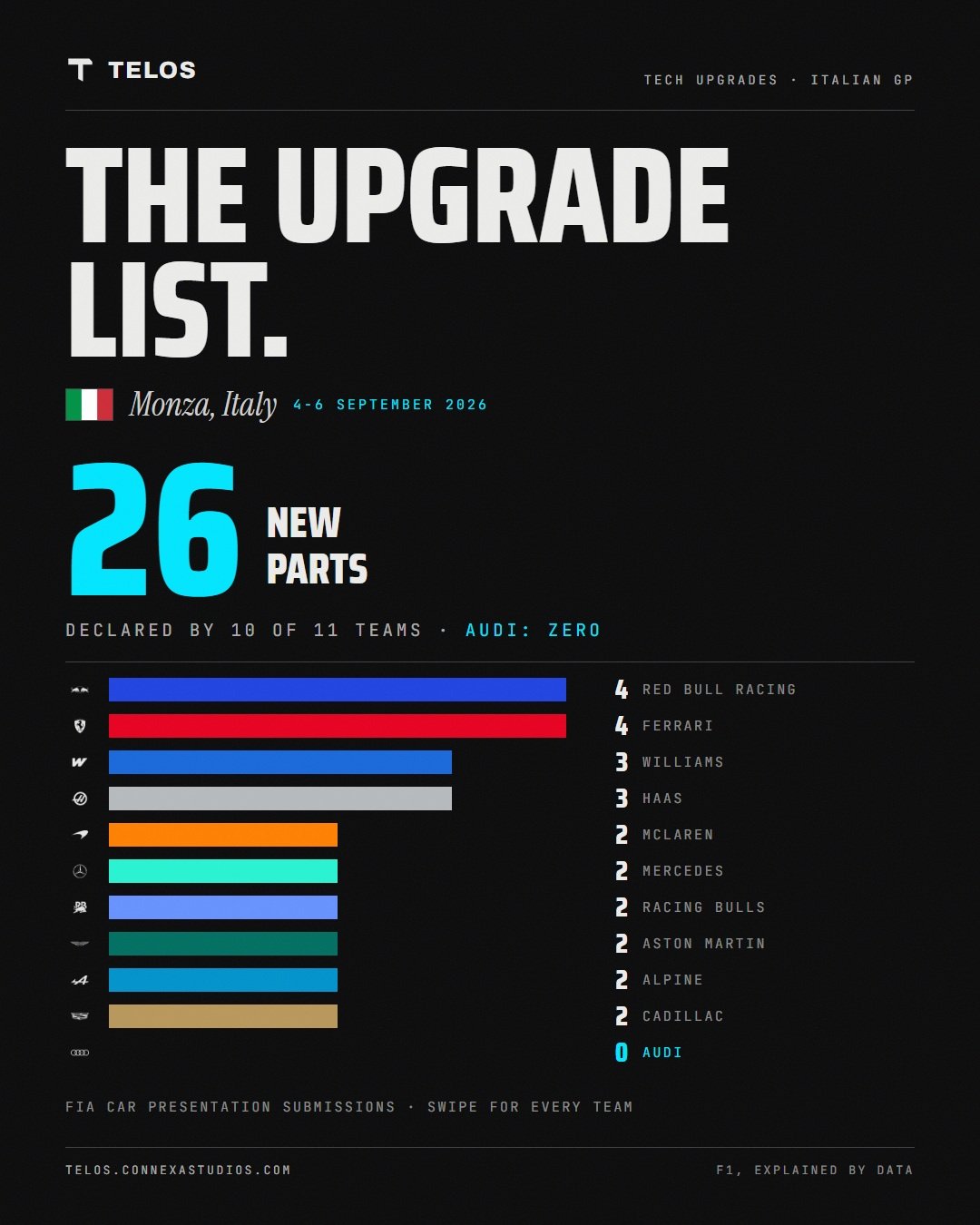
The Italian Grand Prix saw ten of the eleven entries submit at least one new aerodynamic or bodywork component to the FIA, highlighting the varied development trajectories as teams chase performance on the high‑speed circuit.
Only Audi chose to run with no new parts at Monza.
Ferrari’s Drag‑Reduction Package
Ferrari’s updates focused on minimizing resistance on the long straights. The new floor panel, alongside altered mirror stays and a reshaped rear corner, were designed to shed drag, while a fresh engine spec promised additional efficiency under the revised aero load.
McLaren’s Wing Adjustment
McLaren introduced an alternative flap position on the rear wing, a tweak intended to optimise straight‑line stability without compromising down‑force through the fast bends of Monza.
Haas’s Comprehensive Upgrade
Haas presented the most extensive set of changes, delivering a new front floor, sidepod, and engine cover. The breadth of these components suggests a concerted effort to improve airflow management and overall balance for the demanding layout.
Red Bull’s Reliability Focus
Red Bull listed four new parts, two of which were explicitly linked to reliability improvements, indicating a strategic shift toward ensuring component durability alongside performance.
Audi’s Stagnant Specification
In contrast, Audi submitted no new parts, opting to run the same specification as the previous race, a decision that stands out amid a weekend of widespread updates.
The FIA’s mandatory disclosure, released on the Friday before the race, provides the only definitive answer to the perennial question of “who brought what” at a Grand Prix. By mandating these submissions, the governing body cuts through speculation, offering a clear snapshot of each team’s development focus as they approach the high‑speed challenges of Monza.